
ABOUT THE EXHIBITION
Canterbury Shaker Masterworks and the Art of Douglas Deveny
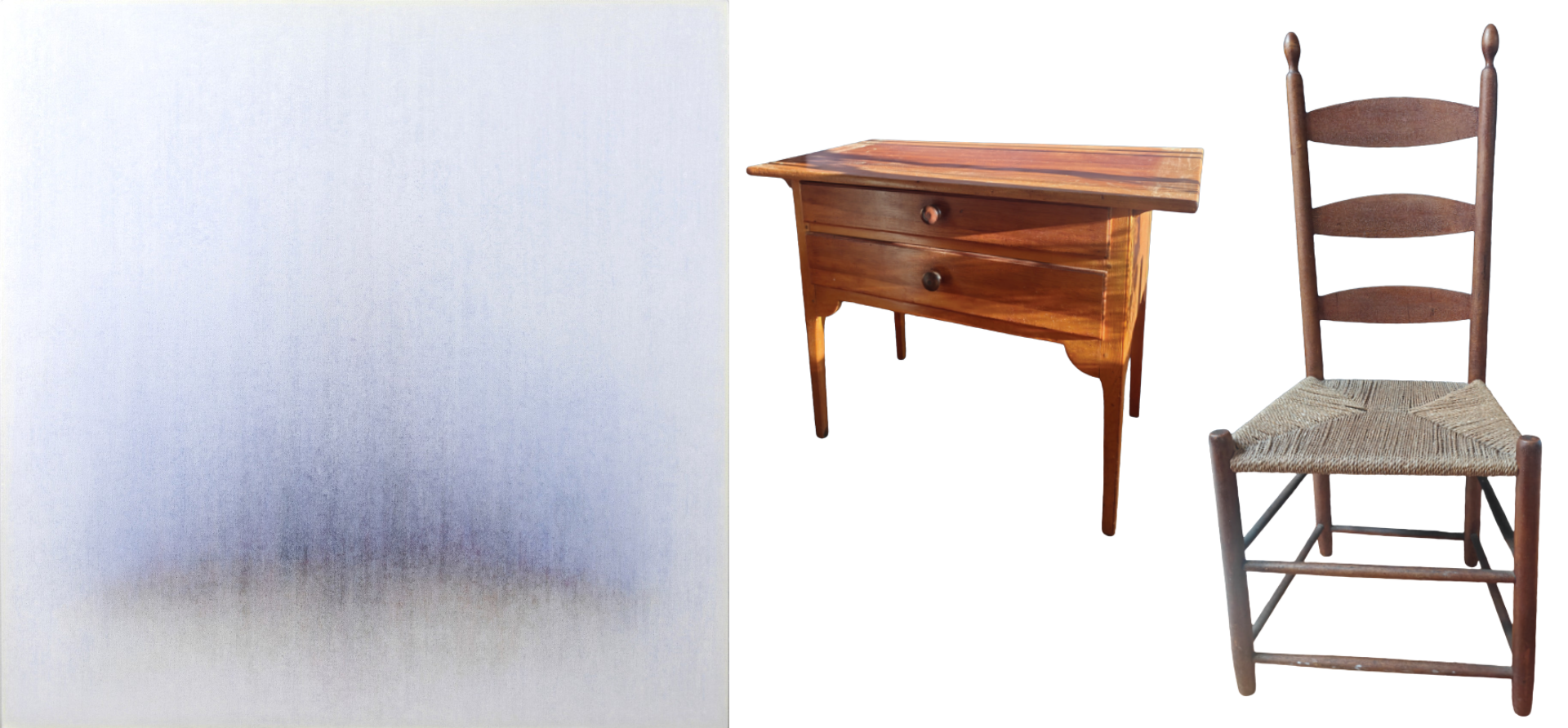
For this 13th rotation in the ongoing series in the Shaker Gallery, we again are pairing a group of classic Shaker made and Shaker used objects with the art of a contemporary artist.
All the objects were made and used at the site in New Hampshire called Canterbury Shaker Village. All are generous loans from private collections. The art was made in the last two years by a Connecticut artist named Douglas Deveny and are on loan from him.
Canterbury Shaker Village is located some fifteen miles north of the State Capitol in Concord. It was founded in 1792, when several adjacent farms were joined by their owners into a self-contained Shaker Community. There, a handful of men and women gathered to dedicate their lives to what we today call “The Three C’s”: Communal ownership of all goods and property, the private Confession of sins to an elected Village Elder, and—most controversial of all—Celibacy. All growth would come from conversions.
By 1840, the number of converts there had grown to 240 men, women, and children. They also had developed a host of communal industries: Dried medicinal herbs and medicines; packaged garden seeds; crafts such as cooperage, brooms, women’s wool cloaks and men’s wool sweaters; and a variety of dairy goods. After the Civil War, their numbers gradually declined until their last member, Sister Ethel Hudson, passed away in 1992.
Douglas Deveny lives close to the Connecticut River and paints in a small studio at the top of his house. His paintings were chosen because they represent for us a vital element of Shaker life: the quiet, contemplative side. Previous exhibits here have represented other physical aspects of this life: their use of light and shadow, the surface textures of objects, and the colors of walls, floors, and objects. Introspection is a key element of Shaker life and is present in prayer services and in quiet moments of silence that precede all their meals.
- M. Stephen Miller, Guest Curator